
Good Shepherd NZ and Financial Services Federation launch code of practice to help specialist lenders in their work to prevent and reduce economic harm
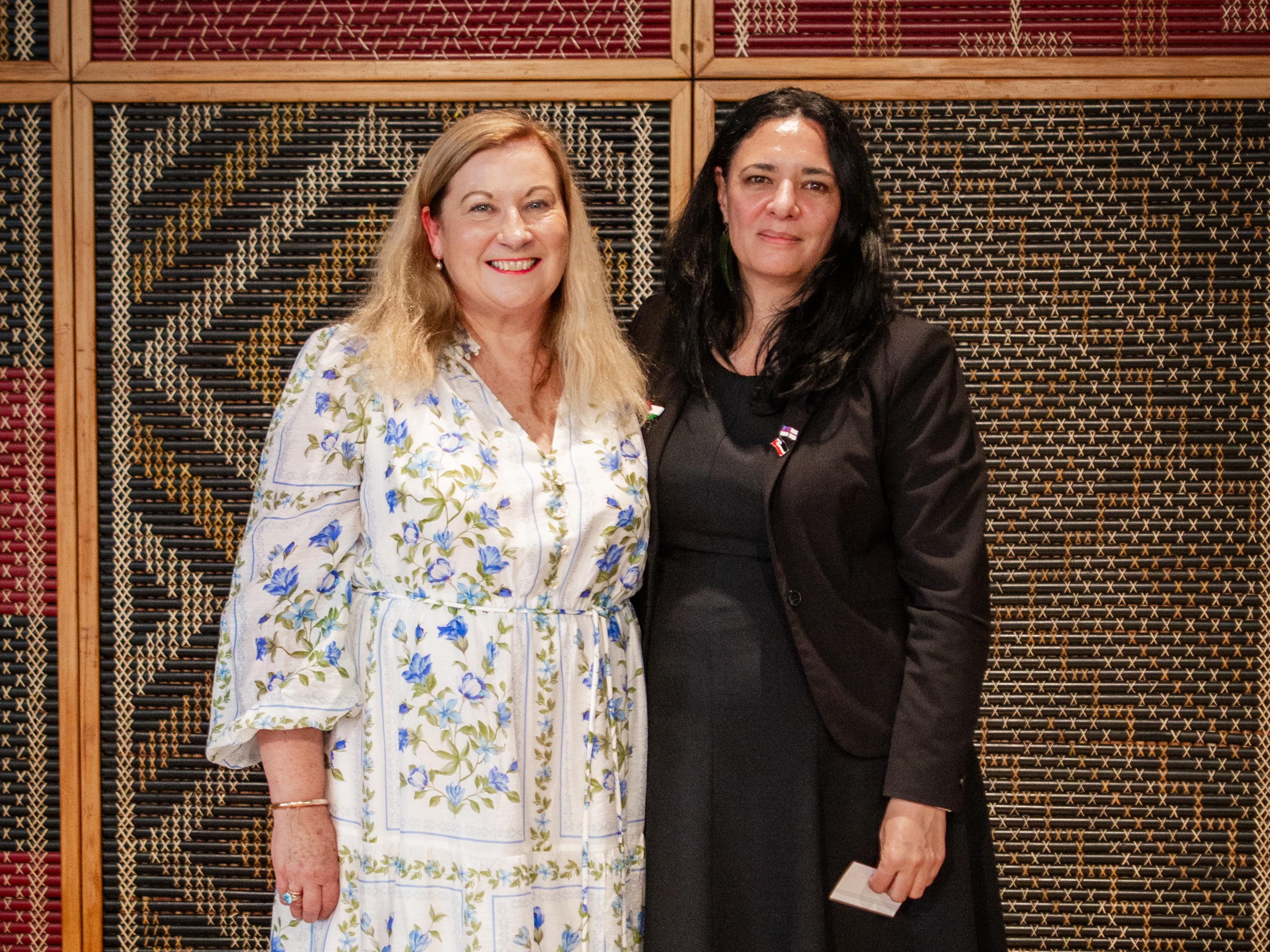
FSF and GSNZ Chief Executives

Good Shepherd NZ and the Financial Services Federation (FSF) are excited to release a code of practice (the code) designed to help specialist lenders prevent and reduce harm for customers experiencing economic harm from family violence.

The announcement comes as Good Shepherd NZ marks International Economic Abuse Awareness Day (26 November 2025) with an event in Auckland to raise awareness of economic abuse and to announce the launch of the code.

“Economic abuse can be more invisible than other forms of family violence, so it is important that lenders and service providers can spot economic abuse and have appropriate processes in place to support their clients”, says Good Shepherd NZ Chief Executive, Tania Pouwhare

For Financial Services Federation (FSF) members, economic abuse means customers might not know about debt they are responsible for, or they suddenly may be unable to make payments. The code outlines responsibilities which member organisations will consider to better meet the unique needs of these customers and reduce the impact of economic abuse.

“We know organisations like those that belong to FSF are committed to supporting customers experiencing harm and vulnerabilities, so working together to develop a code of practice allowed us to draw on our expertise to create a code of practice that we hope will ultimately help victims” says FSF Executive Director, Lyn McMorran

The code is the result of a partnership between the two organisations, reflecting a shared commitment to support those experiencing economic harm from family violence. Co-design with FSF members has ensured that the code of practice responsibilities keep staff and customers safe and recognise the business context these organisations work within.

Good Shepherd NZ, in collaboration with the FSF, its members and family violence specialists, has also developed a companion resource to outline how responsibilities within the code can be met in practice.

“Family violence situations are complex. Staff might want to help, but often don’t know the right way to go about it. The companion resource provides some options and examples for how organisations may respond to different situations when their customers experiencing economic abuse”, says Tania

Further codes of practice will also be developed for the energy, telecommunications, and financial advisor sectors. We hope to see these sectors follow suit and commence co-design work in 2026.

Editor’s note

Help is available:
  • Women’s Refuge — if you’re experiencing financial or economic abuse and/or other forms of family violence call 0800 733 843
  • Good Shepherd’s Family Violence Economic Harm Service — if you’re recovering from family violence and want help with the money piece call 0800 466 370 option 4.
What is economic abuse?
  • Financial and economic abuse is recognised in the Family Violence Act 2018, as a form of psychological abuse. It takes many forms — eg restricting money, damaging property, preventing from work, manipulating how much child support is owed, forcing or fraudulently incurring debt.
  • Recent data shows that more than 60% of women seeking support from Women’s Refuge, who completed a risk assessment, noted they experienced financial or economic abuse.
  • It can be hard to recognise economic abuse because, like other acts of psychological violence, it doesn’t leave visible marks.
    While it often occurs alongside other types of violence, it can also be a standalone act.
    Family violence economic harm can happen to anyone. We see people from all walks of life, socio-economic and demographic backgrounds, who suffer under controlling behaviours and economic abuse.
  • The impact can be devastating and can affect financial wellbeing long after the relationship is over. Research shows us that women’s access to employment is affected by economic harm, which limits their financial independence during and after an abusive relationship.
About Good Shepherd

Good Shepherd is a charitable non-government organisation that helps women, girls and their families who are experiencing harm and hardship.

Good Shepherd NZ provides a specialist support service to help people address and recover from family violence economic harm. Our specialists have experience in financial capability, advocacy and working with those who have experienced family violence and economic harm.

Our work in New Zealand began in 1886. We work in more than 70 countries, drawing on collective expertise, especially in the areas of economic participation and wellbeing, safety and resilience.

The Congregation of Our Lady of Charity of the Good Shepherd has Special Consultative Status with the Economic and Social Council of the United Nations for its work with women and girls and is supported by the Good Shepherd International Foundation.

About the FSF

The FSF is the non-profit industry association for specialist lenders operating in Aotearoa New Zealand, with a collective customer base of over 1.7million consumers and businesses. FSF members provide crucial competition to traditional banks through innovation, agility, and the ability to be closer to their customers.

Members include finance, leasing and credit-related insurance providers, and include the likes of UDC Finance, MTF, Turners, several credit unions and building societies, fintech firms, and the finance arms of global motor vehicle brands including Toyota, Nissan, Honda, BMW, and Mercedes-Benz.

With 60 years of history, FSF has stringent membership criteria and enforces a Code of Conduct to maintain high standards in responsible lending. FSF members prioritise compliance, support consumer protection enforcement, and advocate for balanced regulations that ensure New Zealanders can access responsibly provided credit.
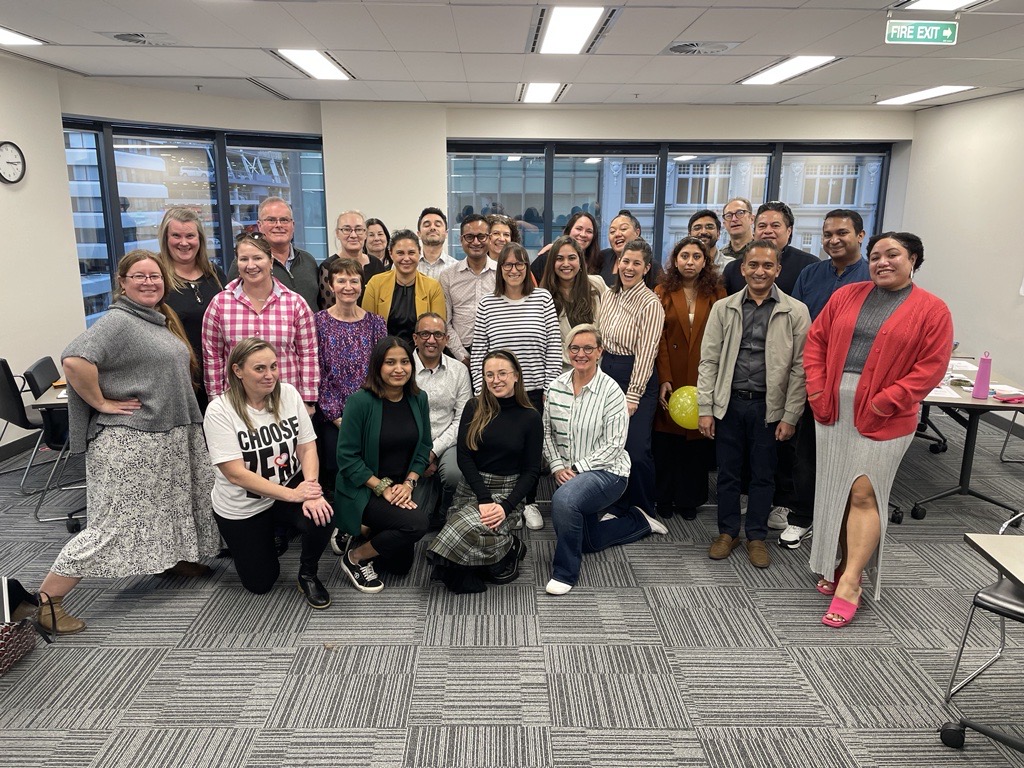
Welcoming Tania Pouwhare as Chief Executive

We are pleased to announce the appointment of Tania Pouwhare as the next Chief Executive of Good Shepherd New Zealand. Tania brings a wealth of experience and a deep commitment to advancing social and economic justice, particularly for women, whānau and communities most impacted by inequality and harm.

Over more than 20 years, Tania has worked across Aotearoa and the UK in roles spanning policy, campaigning, community innovation, and Indigenous economic development. Her pioneering work includes introducing social procurement in Aotearoa, co-founding Amotai (which has enabled over $460m in spend with Māori and Pasifika businesses), and leading system-change initiatives at The Southern Initiative a social innovation team at Auckland Council focused on Māori and Pasifika whānau.

She has also had a long-standing commitment to supporting women impacted by family and economic harm, including early roles with Women’s Refuge in Aotearoa and a decade leading policy and campaigns at the Women’s Resource Centre in London.

Outgoing Chief Executive, Emma Saunders, says “I’m thrilled to know Tania is stepping into the role. Over the last two years, the team has created the strong foundations needed for even more social impact in New Zealand — building capability, organisational resilience, trusted profile and presence, data and insights, new partnerships and services, and more. The Board and I wanted to ensure the next CEO could really leverage what’s been built to deepen and widen our impact for mission. Tania is a fantastic choice for our next phase. We are proud to welcome her to the team.”

Tania is widely recognised as a thought leader and changemaker. She is a Senior Fellow of the Atlantic Social Equity Fellowship, an Honorary Fellow of Engineering NZ, and earlier this year was made a Member of the New Zealand Order of Merit for services to social innovation.

Board Chair Gael Surgenor says, “In my own experience working with Tania at Auckland Council, I have seen her combine sharp systems thinking with deep relational leadership. She is both visionary and practical – able to influence policy and strategy, while also building strong partnerships and delivering tangible outcomes. Above all, she brings an unwavering focus on equity and justice for women and girls, which sits right at the heart of Good Shepherd’s kaupapa.”

Tania will be joining us formally in late September, with time for a handover with Emma before she leaves. We’re grateful that Emma will also remain available in an advisory capacity, to help a smooth transition of leadership and continuation of our important services, pilots and partnerships. 

Good Shepherd and Financial Services Federation partner to help non-bank lenders address economic abuse

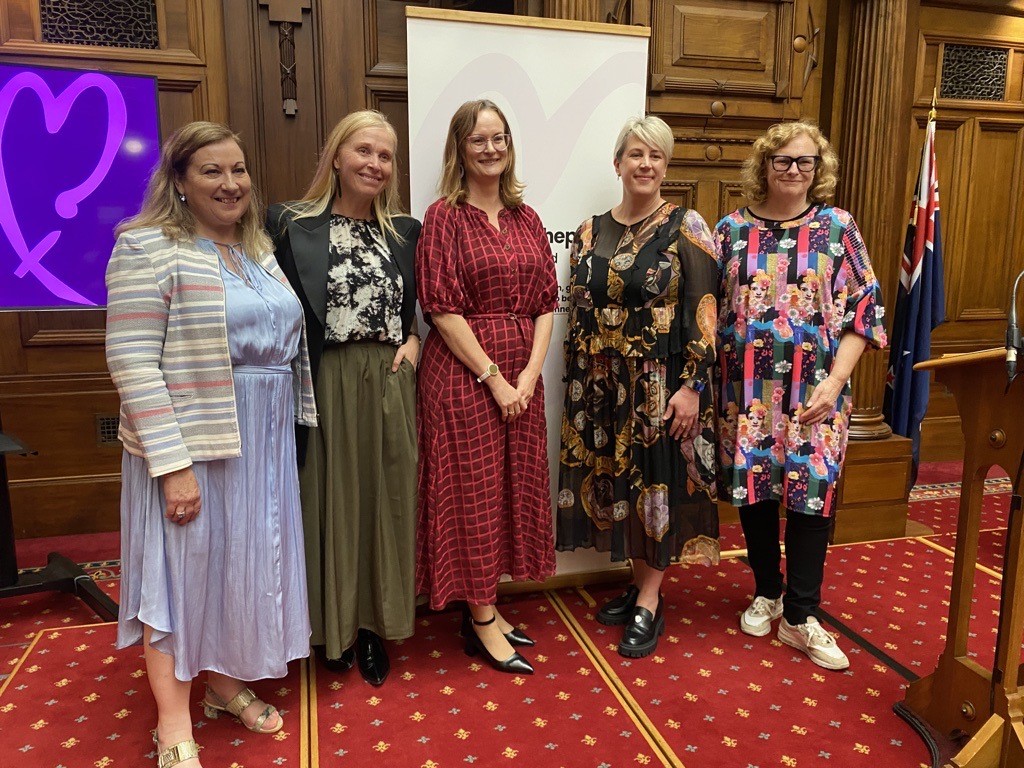
GSNZ event speakers, 26 Nov 24

Good Shepherd NZ is delighted to be partnering with the Financial Services Federation (FSF) to create a code of practice that can be used by member organisations who want to support survivors of family violence economic abuse.

“Economic abuse is a common form and feature of family violence. Examples include restricting someone’s access to money or financial accounts, taking someone’s money without consent, or accumulating debt under their name”, says Good Sheperd NZ CEO, Emma Saunders.

The codes of practice will create guidelines for organisations to provide effective support and fair treatment to customers experiencing economic harm due to family violence.

“Our clients tell us organisations’ frontline staff often don’t understand this form of abuse or know how to help and they often have to navigate many different policies and procedures”, says Emma.

The code is being developed in conjunction with a group of FSF member lender organisations, and FSF Executive Director, Lyn McMorran has had high interest from members wanting to be involved.

“We know organisations like those that belong to FSF are committed to supporting customers experiencing harm and vulnerabilities, so working together to develop a code of practice allows us to draw on our expertise to create a code of practice that we hope will ultimately help victims”, says Lyn.

Co-design of the code for FSF members has begun. Further codes of practice will also be developed for the energy, telecommunications, and financial advisor sectors. Work to develop the codes is expected to be complete in early 2025.

The announcement comes as Good Sheperd NZ marks International Economic Abuse Awareness Day (26 November 2024) with an event in Parliament to raise awareness of economic abuse and to announce the work on the code.

“Part of the issue with economic abuse is that it’s hard to recognise, and many people do not realise it’s a form of family violence. Even if finances are not used as a means of abuse, family violence creates economic harm. For example, money needed to move to safety or not being able to work due to fear or physical injury”, says Emma.

The theme for International Economic Abuse Awareness Day 2024 is ‘There’s no excuse for economic abuse’ and the day is part of the UN Women 16 Days of Activism Against Gender-based Violence.

Editor’s note

Help is available:

  • Women’s Refuge — if you’re experiencing financial or economic abuse and/or other forms of family violence call 0800 733 843
  • Good Shepherd’s Family Violence Economic Harm Service — if you’re recovering from family violence and want help with the money piece call 0800 466 370 option 4.

What is economic abuse?

Financial and economic abuse is recognised in the Family Violence Act 2018, as a form of psychological abuse. It takes many forms — eg restricting money, damaging property, preventing from work, manipulating how much child support is owed, forcing or fraudulently incurring debt.
Recent data shows that more than 60% of women seeking support from Women’s Refuge, who completed a risk assessment, noted they experienced financial or economic abuse. (Good Shepherd research, to be published in January 2024)
It can be hard to recognise economic abuse because, like other acts of psychological violence, it doesn’t leave visible marks.
While it often occurs alongside other types of violence, it can also be a standalone act.
Family violence economic harm can happen to anyone. We see people from all walks of life, socio-economic and demographic backgrounds, who suffer under controlling behaviours and economic abuse.

The impact can be devastating and can affect financial wellbeing long after the relationship is over. Research shows us that women’s access to employment is affected by economic harm, which limits their financial independence during and after an abusive relationship.

About Good Shepherd

Good Shepherd NZ is a charitable non-government organisation that helps women, girls and their families who are experiencing harm and hardship.
Good Shepherd provides a specialist support service to help people address and recover from family violence economic harm. Our specialists have experience in financial capability, advocacy and working with those who have experienced family violence and economic harm.
Our work in New Zealand began in 1886. We work in more than 70 countries, drawing on collective expertise, especially in the areas of economic participation and wellbeing, safety and resilience.
The Congregation of Our Lady of Charity of the Good Shepherd has Special Consultative Status with the Economic and Social Council of the United Nations for its work with women and girls, and is supported by the Good Shepherd International Foundation.

About the FSF

The FSF is the non-profit industry association for specialist lenders operating in Aotearoa New Zealand, with a collective customer base of over 1.7million consumers and businesses. FSF members provide crucial competition to traditional banks through innovation, agility, and the ability to be closer to their customers.
Members include finance, leasing and credit-related insurance providers, and include the likes of UDC Finance, MTF, Turners, several credit unions and building societies, fintech firms, and the finance arms of global motor vehicle brands including Toyota, Nissan, Honda, BMW, and Mercedes-Benz.
With 60 years of history, FSF has stringent membership criteria and enforces a Code of Conduct to maintain high standards in responsible lending. FSF members prioritise compliance, support consumer protection enforcement, and advocate for balanced regulations that ensure New Zealanders can access responsibly provided credit.

Struggling families ‘stuck’ using buy now pay later for essentials

Family on steps

Reported by Jean Edwards for Radio New Zealand.

Struggling families are getting caught in a poverty trap by racking up hundreds of dollars of debt using buy now pay later schemes for meat, nappies and other everyday essentials, budget advisers warn.

Financial mentors are increasingly alarmed by the number of people buying groceries through lenders Afterpay and Zip, as low-income whānau struggle to cope with the cost of living.

At a Mad Butcher store in Christchurch, every shopper spoken to by RNZ was buying meat using a buy now pay later service.

Read the full story