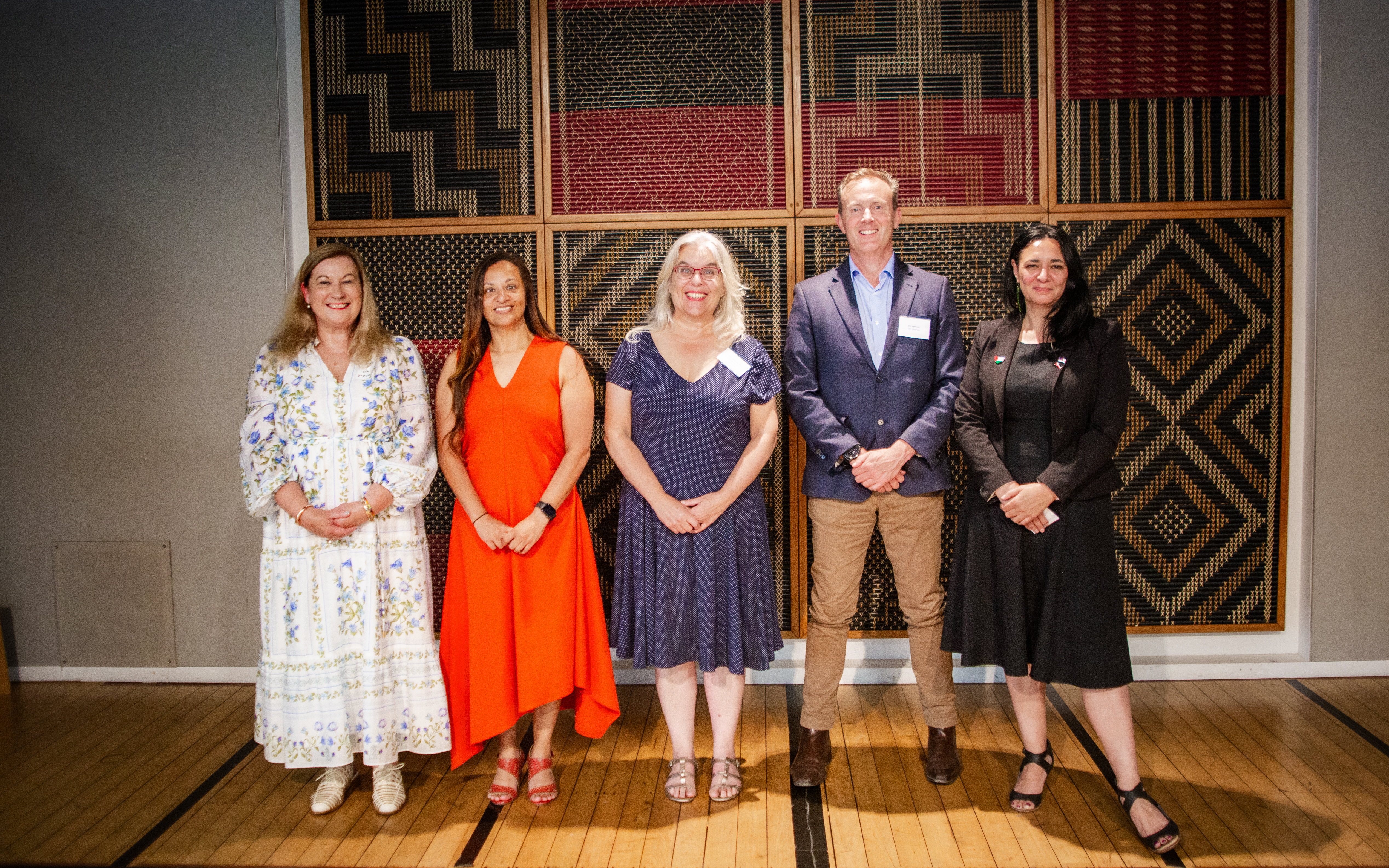
Tania Pouwhare’s first 90 days as Chief Executive
On 23 September 2025, Tania Pouwhare started as the new Chief Executive of Good Shepherd NZ. In her first 90 days, she has already made a big impact.
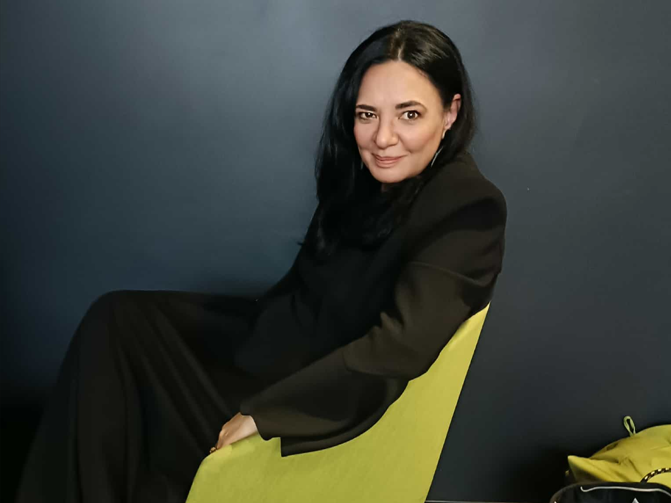
In her first 90 days, Tania has met with every member of our staff across New Zealand, while also forging strong connections with stakeholders, partners and governance.
Her approach has been grounded in deep listening to the Good Shepherd Sisters, ensuring a clear understanding of the Good Shepherd mission and how our work responds to the challenges that threaten women’s wellbeing and safety.
To give you a closer look at her journey so far, we sat down for a candid Q&A.
1. What is your biggest highlight so far?
Just like that famous whakataukī (idiom), ‘He aha te mea nui o te ao? He tāngata, he tāngata, he tāngata (what is the most important thing in the world? It is people, it is people, it is people)’, my biggest highlight has been meeting all the people who make up Good Shepherd.
Our team here in Aotearoa is our biggest asset – they’re what makes Good Shepherd the impactful organisation it is. What I love, is that the team has a really diverse range of skills and experience from finance to social services, but everyone is dedicated to the mission of social and economic justice.
We’re supported by a great Board who are keen for innovation and who understand the smart risk-taking that’s required to achieve that. We can also leverage the experiences and learnings of our colleagues across the ditch at Good Shepherd Australia.
Meeting the Sisters’ has been an absolute pleasure. The more I learn about their work in service to community that they have dedicated their lives to, the greater the impetus that I feel to care for and advance their legacy. They really are a phenomenal group of women.
2. What has surprised you most?
There have been lots of wonderful new learnings as I have found out more about the Good Shepherd whakapapa, Saint Mary Euphrasia and Saint John Eudes.
Last week, I learned from Sister Jan just how entrepreneurial St Mary Euphrasia was and how she embraced wise innovation and savvy organising. She made it a priority for the Good Shepherd Sisters to master technology so they could empower the women they worked with to access industrial and educational innovations. This would have been a radical concept back in the early 1800s. She clearly understood that women’s empowerment was linked to access to resources and the latest know-how, enabling them to create sustainable livelihoods and live with dignity.
‘Audacity’ and ‘zeal’ are core values of Good Shepherd. I see this clearly in its history across Aotearoa and Australia, and globally in its work as a special consultative body with the Economic and Social Council of the United Nations.
An interview was recently held with Sister Winifred Doherty from Ireland, who served at the Good Shepherd International Justice and Peace Office, to discuss global developments in international policy making. This reflects the Congregation’s critical thinking and confidence in staying true to its roots and purpose:
“What has happened is that the corporate sector now has more influence than ever and nobody is being held to account. The neo-capitalist model is concerned with privatization and deregulation, and the “baseline” is profit. Often such practices violate human rights, violate labour rights, prevent unionization, and in the case of mining, engage in exploitation of child labor, land grabbing, deforestation and in practices that are harmful to the environment.”
Hearing this definitely makes me feel I am in the right place!
3. What lessons from your past experiences matter most?
My career started out in NGOs aimed at stopping violence against women. I worked in policy, research and campaigning roles, both here and in London. Large cities have a critical mass of talent and during my decade in London, I had access to a plethora of smart people, their innovation and their skills, on a daily basis – that really was a gift.
When I did return to Aotearoa and settled in Tāmaki Makaurau, I worked for Auckland Council, the largest local government organisation in the Asia-Pacific. This next stage of my career focussed on developing innovations to disrupt intergenerational economic inequality affecting south and west Auckland – especially for Māori and Pasifika peoples – while addressing the wider implications for the city and NZ Inc. if we didn’t get it right.
I got to experiment and work with some of the sharpest minds, creating systems-change in the country. Despite being immersed in very different issues, both experiences taught me about the importance of relationships and how you need a broad church of supporters to not just create social change but to scale it. Being at Good Shepherd feels like I’ve landed in a dream job where I can bring these passions, connections and skills together as a single endeavour.
4. What is the biggest opportunity you’ve identified so far?
The Good Loans programme gives Good Shepherd such a great platform that we have so many opportunities ahead of us! The challenge is to make smart choices with our resources.
I’m looking forward to amplifying our family violence economic harm work and to supporting women in building dignified income through entrepreneurship and decent employment.
Helping women to move from surviving to a fulfilling, thriving life – with genuine economic agency and financial security – is a great starting point for realising these opportunities.
Tania’s first 90 days have brought energy and vision to the role. Her reflections remind us that leadership is about connection and purpose, and we’re excited to see how the next 90 days unfolds.